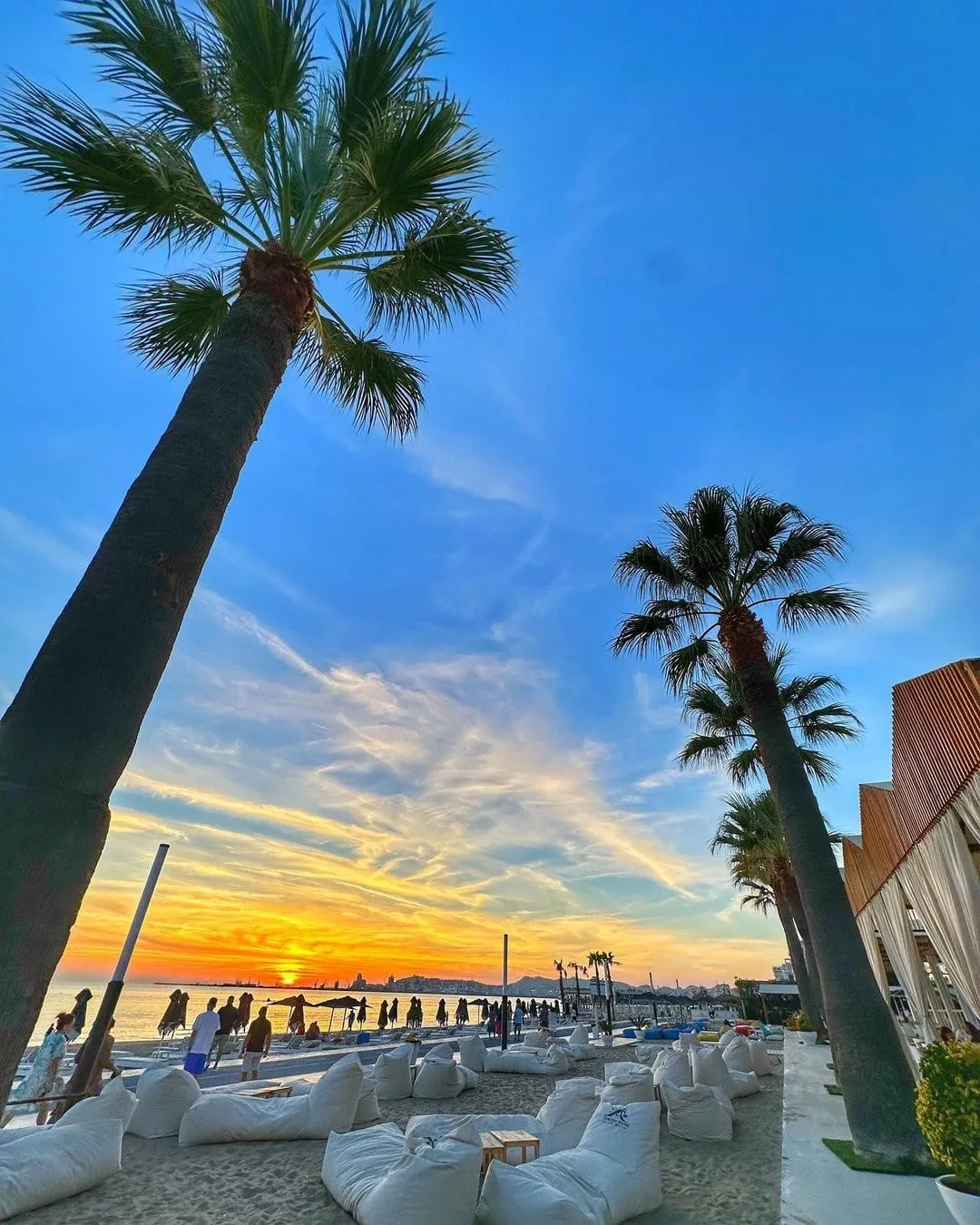
Durrës Travel Guide: Things to Do, Beaches & Day Trips
2,600 years of history, ten kilometres of beach
What to see and do in Durrës: the Roman amphitheatre and old town, the best beaches, day trips, food, weather and how to get here.
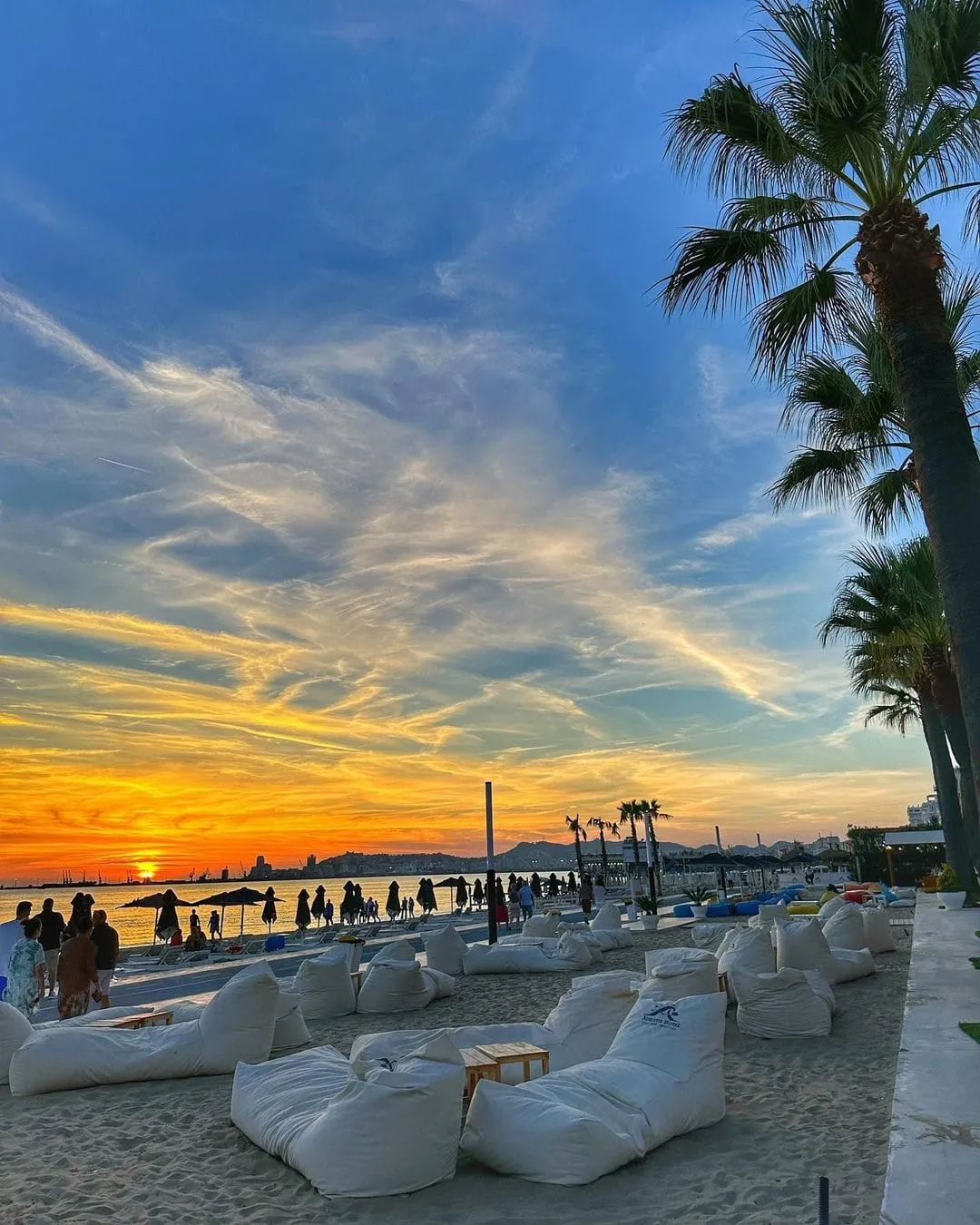
Why visit Durrës, Albania
Durrës is Albania’s second city, its main port and its oldest seaside resort: a 2,600-year-old town with a Roman amphitheatre at its centre and more than ten kilometres of sandy beach on the Adriatic. Founded in 627 BC as Epidamnos by Greek settlers from Corinth and Corfu, it became Roman Dyrrachium, the western start of the Via Egnatia to Constantinople, and was the capital of Albania from 1914 to 1920.
It is also the easiest beach holiday in Albania to reach: about 30 minutes from Tirana International Airport and 40 minutes from the capital. This Durrës travel guide covers the best things to do in Durrës, the beaches, day trips, food, weather and transport. It is written by the team at Adriatik Hotel, on Durrës Beach since 1957.
- Founded
- 627 BC, as Epidamnos
- Tirana airport
- 33 km, about 30 minutes
- Beach season
- May to October
Things to do in Durrës: the old town
The historic centre is compact: every sight below is within a 15-minute walk of the others, so half a day covers the essentials. From Adriatik Hotel the old town is about ten minutes by taxi.
Durrës Amphitheatre
Built in the 2nd century AD under Emperor Trajan, the Roman amphitheatre of Durrës held 15,000 to 20,000 spectators and is the largest in the Balkans. It lay hidden under houses until 1966. Walk the galleries where gladiators waited and look for the small early Christian chapel with wall mosaics of saints and angels. Entry costs a few hundred lek, paid in cash.
Durrës Archaeological Museum
Albania’s largest archaeological museum stands on the seafront and follows the city from Illyrian and Greek Epidamnos to Roman Dyrrachium: grave steles, marble busts, amphorae lifted from the sea, coins and jewellery. It is usually open from morning to mid-afternoon and closed on Mondays, so check the hours before you go.
Venetian Tower and Durrës Castle
Emperor Anastasius I, who was born in Durrës, rebuilt the city walls around AD 500, and long stretches of them still stand. The round Venetian Tower was added in the 15th century; its roof terrace looks over the port, the walls and the old town.
Byzantine Forum and Roman baths
A ring of marble columns with Corinthian capitals marks the round Byzantine forum, the market square of the 5th and 6th centuries. The Roman baths lie just behind the Aleksandër Moisiu Theatre. Both are free to see and take a few minutes each.
Liria Square, the Great Mosque and Fatih Mosque
Sheshi Liria is the palm-lined main square, with the town hall, the theatre and the Great Mosque of 1931. A few streets away, the small Fatih Mosque dates from 1502, the year after the Ottomans took the city.
Royal Villa of King Zog
The summer palace of King Zog I crowns the hill above the old town. The interior is not reliably open to visitors, but the walk up is worth it for the widest view of the bay of Durrës, the port and the beach.
Vollga promenade and the Sfinksi steps
The seafront promenade, known as Vollga, runs from the port past cafés, ice-cream stands and seafood restaurants to the Sfinksi steps. The whole town comes here for the evening walk, the xhiro, and for the sunset over the Adriatic.
Best beaches in Durrës
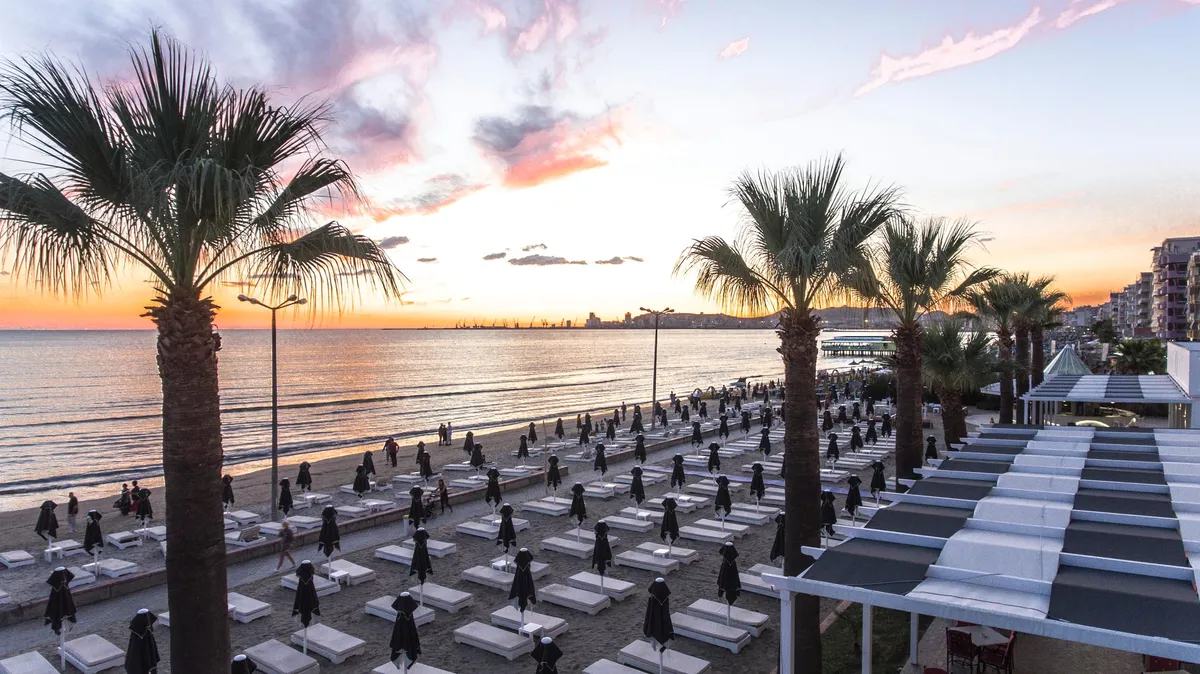
Durrës Beach, simply Plazh to locals, is a sandy bay more than ten kilometres long, with shallow, calm water that warms early in the season and suits children. It is lined with hotels, beach bars and sunbeds for hire, and in July and August it is the liveliest stretch of coast in Albania.
Adriatik Hotel stands directly on this beach, with its own stretch of sand, loungers and umbrellas, a beach bar and outdoor seawater pools a few steps from the shore.
More beaches near Durrës
Currila Beach
North of the port, below the hills of the old town, Currila is the city’s traditional local beach: small coves, fish restaurants on the water and a short taxi ride from the centre.
Kallm Beach
Beyond Currila the road ends at Kallm, where green hills and pines run down to the sand. It is quieter than the main beach, with a few beach clubs and some of the best sunsets near Durrës.
Golem and Mali i Robit
South of Durrës the bay continues to Golem and Mali i Robit, a resort strip of pine woods, wide sand and family hotels, 15 to 25 minutes away by car.
Lalzit Bay (Gjiri i Lalzit)
About 45 minutes north, Lalzit Bay has clearer water, long open stretches of sand and a handful of beach restaurants. Go by car and stay for a seafood lunch.
Cape of Rodon
About an hour north, the Cape of Rodon is the wild choice: clay cliffs, pebble coves, the ruins of Skanderbeg’s castle and the little church of St Anthony. The last kilometres are on a rough road, so a car or a driver is the practical way to go.
Day trips from Durrës
Durrës sits in the middle of Albania, on the motorway to Tirana and the coast road south, so most of the country’s best-known sights are a day trip away.
Tirana (40 minutes)
The capital is 38 km away: Skanderbeg Square, the Bunk’Art museums in Cold War bunkers, the Pyramid, the New Bazaar and the Dajti cable car.
Krujë (1 hour)
Skanderbeg’s hilltop stronghold, with a castle, the national hero’s museum, an ethnographic house and a cobbled Ottoman bazaar selling copper, felt slippers and carpets.
Berat (1.5 hours)
The UNESCO-listed “town of a thousand windows”: white Ottoman houses stacked up a hillside, a castle people still live in, and the Onufri icon museum.
Apollonia and Ardenica (1 to 1.5 hours)
The ruins of ancient Apollonia, where the young Octavian, later Emperor Augustus, studied, lie among olive groves near Fier. Pair them with the Byzantine monastery of Ardenica on the way back.
Divjakë-Karavasta National Park (1 hour)
Albania’s largest lagoon, home to Dalmatian pelicans and flamingos, lies behind a pine forest and a long wild beach. Good for birdwatching, cycling and a fish lunch.
Wine tasting in the Durrës hills
The hills between Durrës and Tirana grow the native Shesh i Zi and Shesh i Bardhë grapes. Several family wineries open for tastings by appointment.
Adriatik Tours, the hotel’s sister agency, runs guided day tours from Durrës, and ProTaxi provides private drivers for any of these routes.
What to eat in Durrës
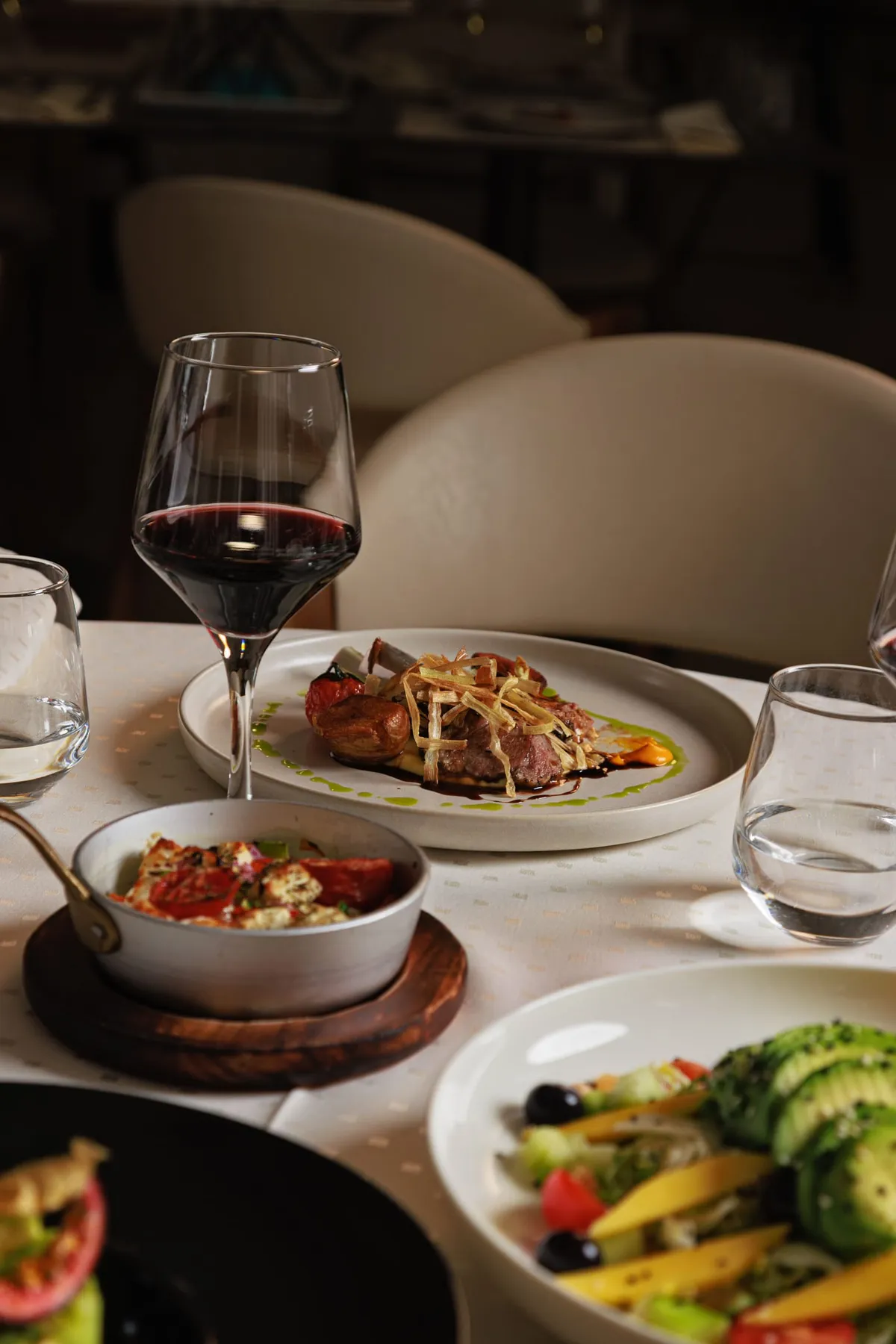
Durrës cooks what the boats bring in: grilled sea bass and bream, mussels, prawns, octopus salad, seafood pasta and risotto, a taste shared with Italy across the water. The classics of Albanian home cooking are on most menus too:
- Tavë kosi: lamb baked under a yoghurt and egg crust
- Byrek: flaky pastry filled with cheese, spinach or meat
- Fërgesë: peppers, tomatoes and curd cheese baked in a clay dish
- Qofte: grilled meatballs with herbs
- Trileçe: a light three-milk cake with caramel
- Raki, Skënderbeu konjak and Albanian wines
At the hotel, Apollonia Restaurant serves the morning’s catch, homemade pasta and Albanian dishes with sea views.
Best time to visit Durrës
Durrës has a Mediterranean climate with about 2,700 hours of sunshine a year. The beach season runs from May to October.
Spring: April to June
Days of 18 to 27 °C, green hills and uncrowded sights make this the best season for the old town and for day trips. The sea is warm enough for most swimmers from June.
Summer: July and August
Hot, dry and lively, with highs of 30 to 33 °C and the sea at 24 to 25 °C. This is peak season in Durrës, so book rooms early.
Autumn: September and October
September is the local favourite: the sea is still warm, the crowds have gone and prices drop. October stays mild and brings the first rain.
Winter: November to March
Mild and quiet, with highs around 13 °C and most of the year’s rain. A good time for museums, long seafood lunches and the heated indoor seawater pool at Queen Teuta Spa.
How to get to Durrës
From Tirana airport to Durrës
Tirana International Airport (TIA) is about 33 km from Durrës, around 30 minutes by car. An airport bus runs to Durrës several times a day for about 600 lek; the timetable changes with the season. The simplest option is a pre-booked transfer: ProTaxi at Adriatik Hotel runs 24/7.
From Tirana to Durrës
Buses and minibuses leave Tirana’s regional bus terminal about every half hour through the day and take 40 to 50 minutes for a few hundred lek. By car it is 38 km on the SH2 motorway.
Ferry from Italy to Durrës
Overnight ferries link Bari and Durrës all year in 8 to 10 hours, operated by Adria Ferries, GNV and Ventouris Ferries. There are also sailings from Ancona, which take 17 to 19 hours.
Getting around Durrës
The old town is walkable. City buses run along the beach road between the centre and Plazh, and taxis are inexpensive; agree the fare first or ask the hotel to book one. The currency is the Albanian lek. Euros are widely accepted in hotels, but carry lek in cash for museums, buses and small cafés.
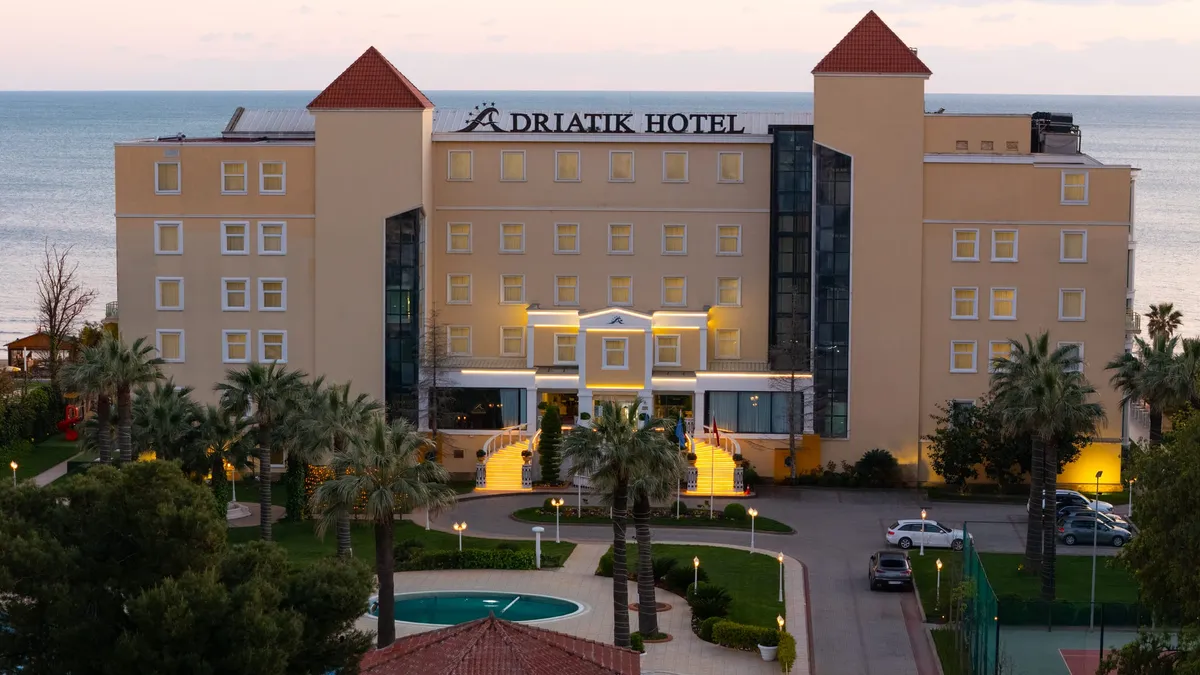
Where to stay in Durrës: on the beach
The old town has the sights, but the beach district, Plazh, has the sand, the sea-view rooms and the space. Adriatik Hotel was Albania’s first hotel when it opened here in 1957. Today it is a five-star beachfront hotel in Durrës with 70 rooms and suites, a private beach, three pools, Queen Teuta Spa and two restaurants.
Families have a kids’ pool, a playground and the indoor Adriatik Kids Zone; couples have sea-view balconies and the hammam. Some rooms even have a mural of the Durrës amphitheatre above the bed.
Durrës travel questions
Is Durrës worth visiting?
Yes. Durrës combines a 2,600-year-old old town, home to the largest Roman amphitheatre in the Balkans, with a sandy beach more than ten kilometres long, about 30 minutes from Tirana airport. It works as a beach holiday, as a first or last stop in Albania, and as a base for day trips to Tirana, Krujë and Berat.
How many days do you need in Durrës?
One day is enough for the old town: the amphitheatre, the Archaeological Museum, the Venetian Tower and the promenade. Plan three to five days to add beach time and one or two day trips, and a week for a full beach holiday.
What are the best things to do in Durrës?
Visit the Roman amphitheatre and the Archaeological Museum, climb the Venetian Tower, walk the Vollga promenade at sunset, spend a day on Durrës Beach, eat fresh seafood, and take a day trip to Tirana, Krujë, Berat or the Cape of Rodon.
Which is the best beach in Durrës?
For families and convenience, Durrës Beach (Plazh): wide sand, shallow water and every service at hand. For a quieter setting, Kallm, below the pine hills north of the city. For clearer water and open space, Lalzit Bay, about 45 minutes north by car.
How do I get from Tirana airport to Durrës?
Tirana International Airport is about 33 km from Durrës, around 30 minutes by car. You can take the airport bus to Durrës, which runs several times a day for about 600 lek, a taxi from the rank outside arrivals, or a pre-booked transfer such as ProTaxi at Adriatik Hotel, available 24/7.
When is the best time to visit Durrës?
June and September are the best months: warm sea, sunny days and fewer people than in July and August, which are the hottest and busiest. April, May and October suit sightseeing and day trips; winter is mild and quiet.
Can you swim in the sea in Durrës?
Yes. Durrës Beach is sandy and shelves gently, so the water is shallow and calm near the shore. The swimming season runs from about June to early October, with the sea at 24 to 25 °C from July to September.
Is Durrës good for families with children?
Yes. The sandy beach and shallow water suit small children, the old town is compact, and transfers from the airport are short. At Adriatik Hotel families also have a kids’ pool, a playground, the indoor Adriatik Kids Zone and a Kids Bar.
What currency is used in Durrës?
The Albanian lek (ALL). Hotels and many restaurants accept cards, and euros are often accepted, but carry lek in cash for museum tickets, buses, taxis and small cafés. ATMs are easy to find in the centre and along the beach road.